
Does AI stop children from learning?
Smart
The Economist
New data show the peril and promise of the technology
24. August 2026, 14:00
Students and Schoolchildren are increasingly using artificial intelligence. A survey last year by Chegg, an ed-tech firm, found that 80% of rich-world undergraduates used it in their studies. More recent polls put the figure at 94% in Britain and 93% in Germany.

Such widespread adoption has fuelled concerns about the impact the technology might be having on learning. Teachers report marking identikit essays that they suspect are churned out by ChatGPT. Yet firm evidence on AI’s educational effects has been lacking.
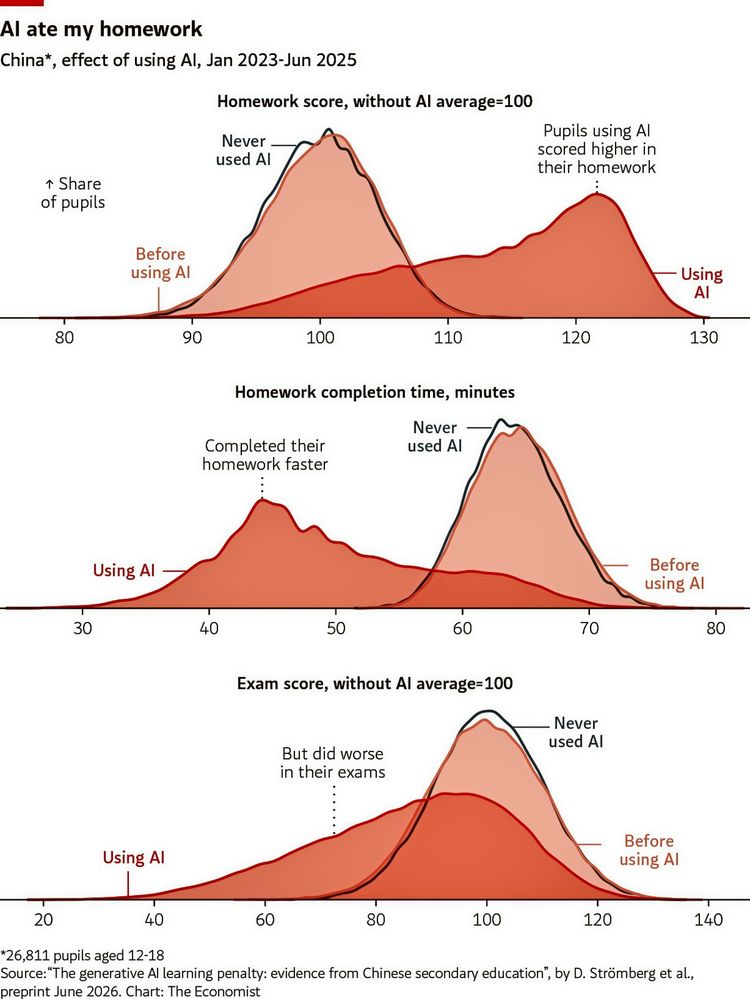
David Stromberg of Stockholm University and Victor Lei and Wu Yanhui of the University of Hong Kong set out to fill the gap. They tracked 27,000 pupils aged 12-18 in China, where AI adoption has been fast. Around 80% reported using models such as Doubao and DeepSeek; the other 20% formed the control group.
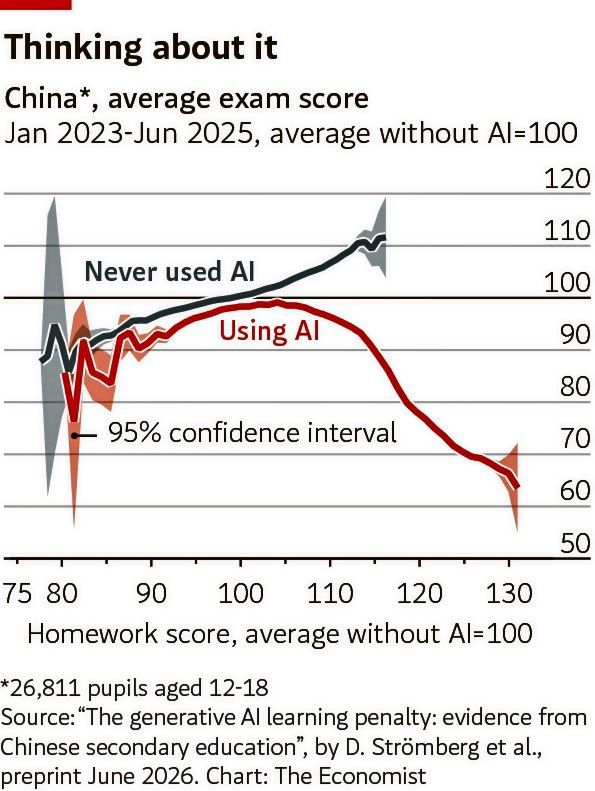
The results are eye-opening. After six months, pupils using AI saw their average homework score rise by 18% across all subjects. The time they took to complete each assignment fell from an average of 64 minutes to 45. But come exam time, the same students scored 20% below their classmates who had not called on AI’s help. Homework scores once predicted exam performance; now those who score highest are, perversely, more likely to do worse in exams.
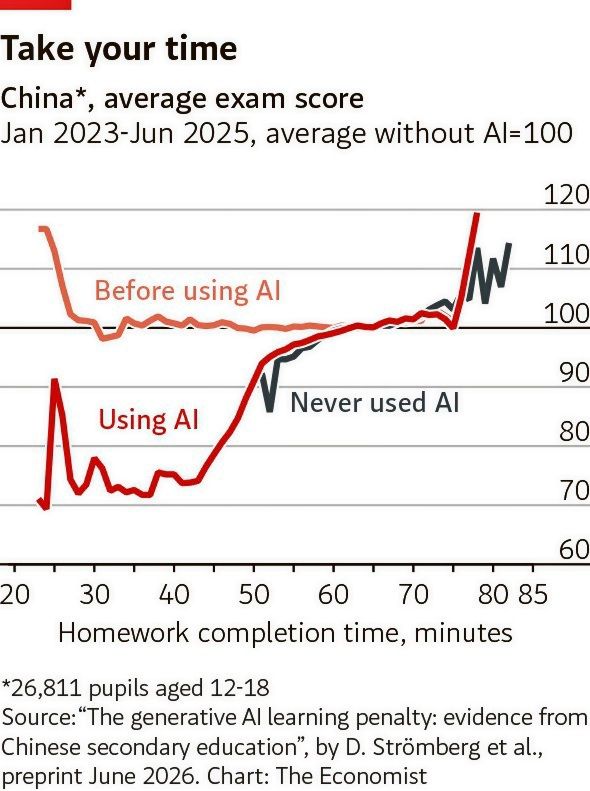
Should schools ban AI? Not necessarily. The drop in exam scores was concentrated among students who rushed their homework. Those who used AI but spent as long on assignments as non-users paid little penalty. What matters, then, is how pupils use the technology. Those whose exam results remained strong were not simply copying and pasting answers to save time. More likely they used the chatbots as a personal tutor, perhaps to explain difficult concepts or help solve specific problems.
In another new study, Zara Contractor and Germán Reyes of Middlebury College had undergraduates learn about an unfamiliar topic, either with or without the help of a chatbot. Students using AI scored higher on tests, and the advantage persisted when they repeated the task a week later.
The evidence, though still limited, points one way: AI can boost learning productivity, but only for those who use the technology intelligently. Students must resist the temptation to reach for an AI-generated answer before thinking things through for themselves.
©2026 The Economist Newspaper Limited. All rights reserved